At 8AM we sit out of the side of the KKH waiting for a ride to Sust. At Gulmet today there is a festival culminating in a visit by the President, so all of the traffic is southbound while we want to go north. But it is pleasant sitting there on a pile of sacks full of seed potatoes in the shade of the poplar trees which line the road. Eventually a green Datsun pickup comes along and I flag it down. The driver wants ₹10 per person to take us to Sust, 36 kilometres away, which is a reasonable price so I accept. With our gear loaded onto the pickup, and Blue and Kerry taking up most of the remaining space, we speed along the highway with the cold slipstream tugging at our clothes.
Beyond Passu, the Batura Glacier marches down from storm-lashed mountains, its surface hidden by rubble and crushed rock. Meltwater rages down a steep streambed, grey and glutinous, looking like a stream of liquid cement. The road crosses a girder bridge, which rattles and creaks, then continues on into a narrow canyon: a strip of shining black laid through a landscape of rock.
We pass the point where we turned back on our last trip: a rocky cutting with the river below. Then the road, after following a river flat, begins to ascend a series of terraces upon which are built small, nondescript village. The mountains are composed of a shale-like rock which shatters into flakes and flow down the mountainsides in uniform scree-slopes. Along the foot of the mountains runs a layer of mudstone, possibly remnants from the sea bed of Tethys.
After about forty minutes we arrive in Sust, a dusty, windswept cluster of houses, shops and restaurants stretched out along the terrace above the river. We opt to stay in the shabby Mountain Refuge Hotel, as it has been recommended by several people. Dorms of ₹50 each, but they smell bad so we leave our gear unpacked while we go into the main part of the village to buy tickets for the SinoPak bus.
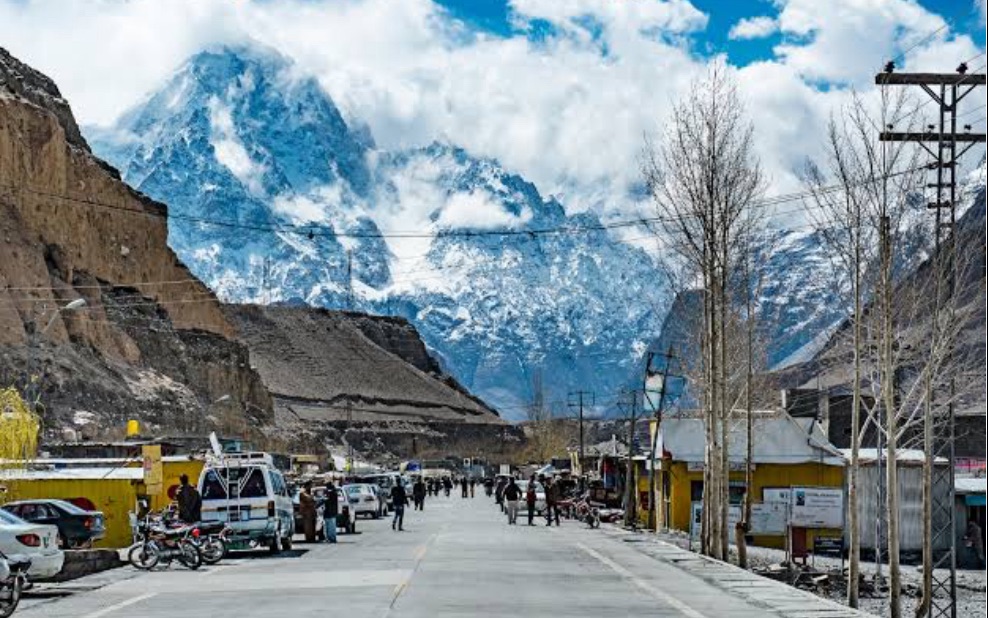
Each of the several restaurants in the village sports satellite TV, and we sit in one watching Star TV, the Asian version of Sky. It’s Channel V is like MTV and we sit, almost unbelieving, watching music videos while burly Hunza men stuff beef curry and chapati into their bearded faces.
One video is Pink Floyd’s song Take It Back. It depicts an Earth shattered by war and degradation, with leafless trees, starving people, droughts, fires and floods. Outside the window, on the dusty street, donkeys, battered old trucks bedecked with shiny trinkets, a wild river, and towering mountains. Western civilization could have gone, been wiped out, and no one here would know.

 CurseOfTheTraveller