After a simple breakfast of porridge and tea, we wait outside the hostel for our promised ride. Half and hour late (of course), a man arrives in a white Hilux four wheel drive, which we are told is to take us over the pass. Bundling our stuff into the back, we set off into town and down to the Customs post. One kilometre past the main part of Sust, we are dropped in the compound behind the customs building and we have to wait for half an hour before the customs office officials turn up for work.
The search of our packs is cursory and virtually irrelevant. Exit stamps from the officers in their smart blue uniforms. Details recorded in a big black book. Free to go. In another Hilux, this time red, we set off, travelling north along the highway, which straight away leads into a narrow valley. We stop for diesel, then continue. The valley becomes narrower, its walls towering over us, the river confined to a tight gully beside us. The scenery is spectacular with narrow gorges giving way to river flats, along which grow small stands of poplar trees, resplendent in bright autumn colours: yellows, reds and golds.
There is another checkpoint: a cluster of buildings with the flag of Pakistan, green and white, flapping in a strong breeze. We enter our names in the book, then continue. The valley becomes very narrow and shady in places. Huge slips have come down from the mountains above, smashing the road and covering it with debris. In other places the river has gouged into the road, taking great chunks of it away. Work gangs, camped in dismal tents in lonely places work constantly to repair the road: a never-ending task.

There is one last checkpoint: a lonely building at the foot of the valley wall where the road begins its climb up to the pass to the east. Another valley runs down from a group of vast snowy mountains, shrouded by slate-grey cloud. In the riverbed, two shepherds huddle over a small fire while their charges, a large flock of goats, graze.
The road zigzags up towards the pass through a large boulder field. Small glaciers covered with finely crushed mountain run down to the road. Small streams fringed with ice flow down from the mountains that dominate the vista, their tops shrouded. A few herds of yaks graze; a huge bird, larger than a condor, resembling an Australian bush bustard picks at a carcass. The air is cold and thin.
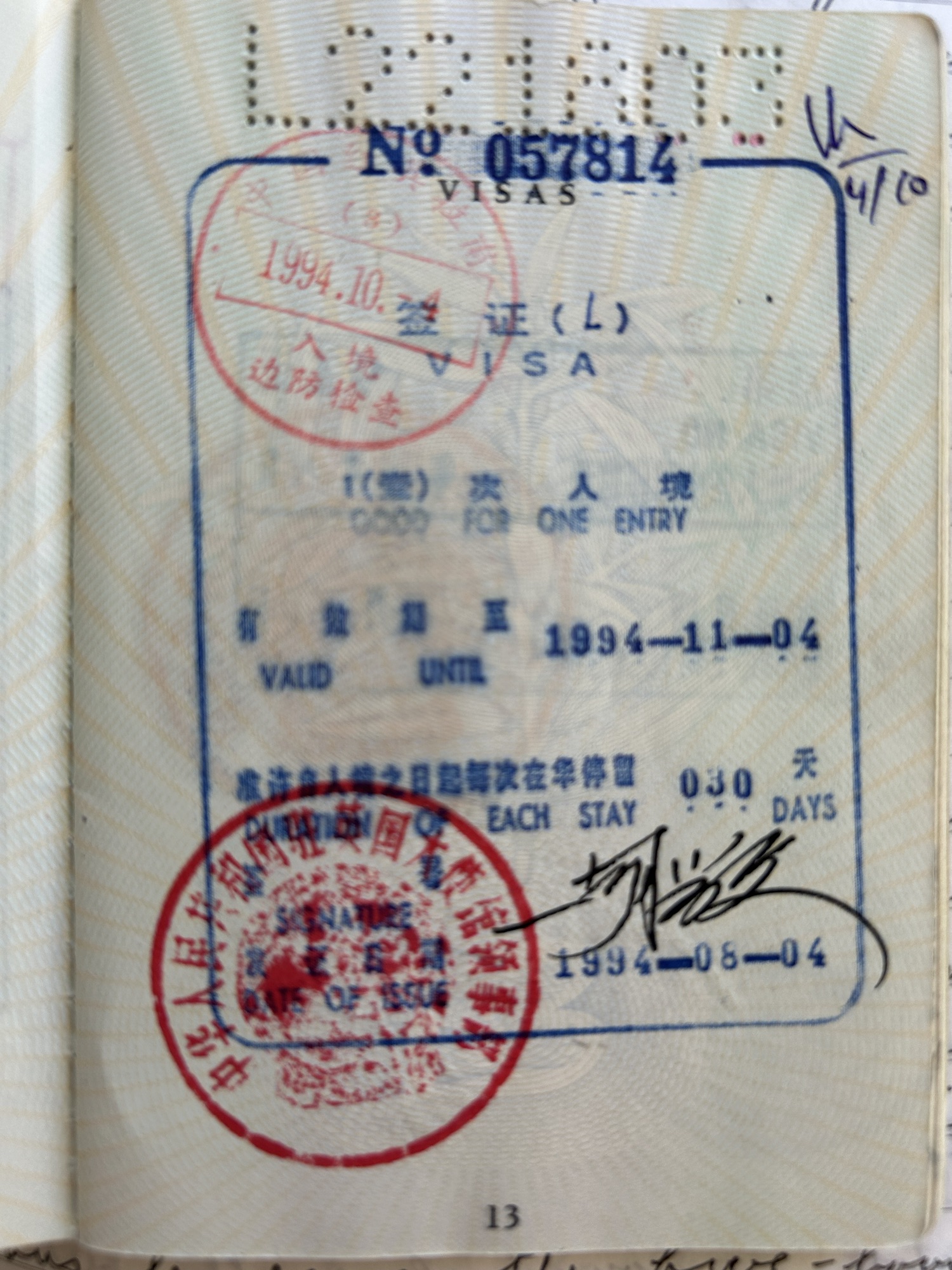
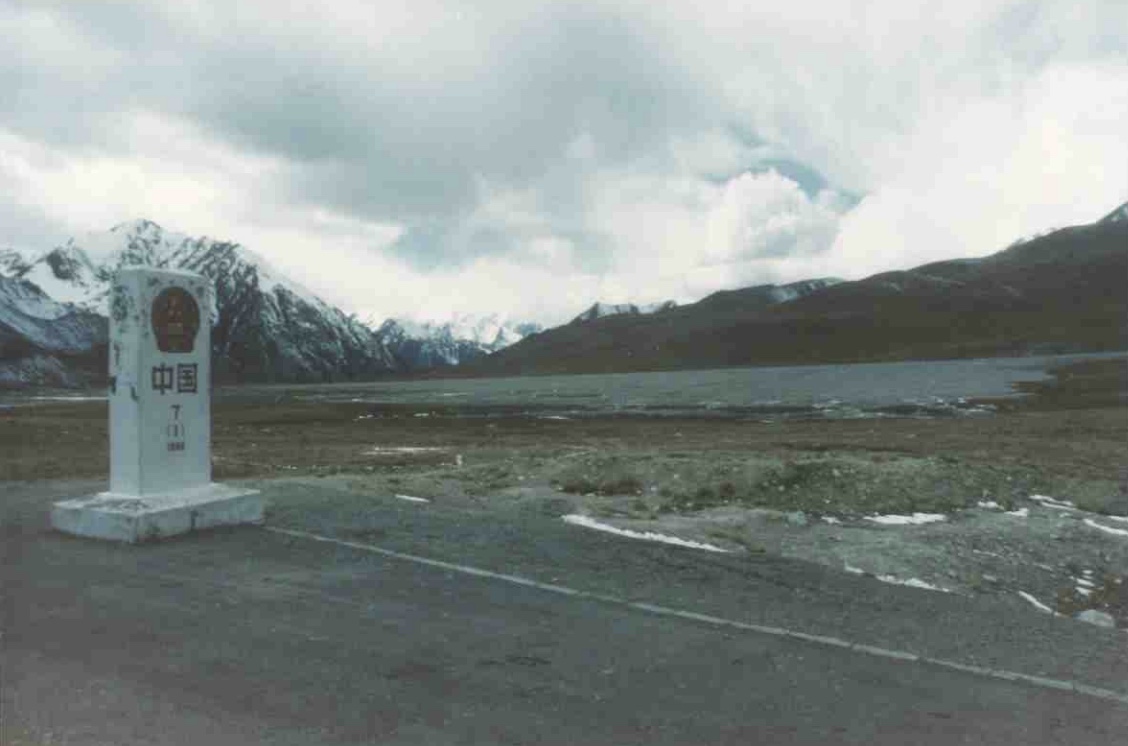
Rather than being a well-defined saddle or couloir, the Khunjerab Pass is more of a valley sloping downwards into China. It is hard to equate this high, lonely place with the teeming hordes of the People’s Republic. A large herd of yaks graze the brown, boggy alpine pasture: a sort of international herd with the freedom to move between the countries on a whim. At the very top of the pass, the last cheerful Pakistani post stands windswept and cold. Workmen are busy repainting the words A Tribute to Chou Enlai carved into a stone monument. The Khunjerab Glacier flows down directly towards the pass, with its surrounding mountains partially hidden in the cloud. It looks vaguely threatening. Beyond the checkpoints, two stone plinths mark the end of Pakistan and the beginning of China.

A GATEWAY BETWEEN WORLDS
At 15,000 feet in, the air is clear and cold. We celebrate our arrival with cigarettes and photographs. In front of us, the Pamir Range in China; behind us, the Karakoram Mountains and Pakistan. Several jeep loads of Pakistanis are at the pass for a day trip. Some of them take photographs of us.
Back in the four-wheel drive, we descend, leaving Pakistan behind, to the first checkpoint of the People’s Republic of China. The cheerful guards harass the driver good-naturedly and ask us for coins from New Zealand. They are dressed in the People’s Army green and have a cosy porta-cabin to live in. After inspecting our passports we are allowed to move on down the road, now on the right-hand side, which follows a small eastward-flowing stream. Clusters of yurts and rough dwellings are scattered along the road and shaggy Bactrian camels glare disdainfully at us as we pass.
The landscape is cold, bare and brown: an unimaginably hostile place to live. Shepherds tend large flocks of sheep and goats, but there doesn’t appear to be anything for them to eat. The summer pasture is gone, grazed to the earth. The road runs down the centre of the valley, past small streams and tiny lakes. Snow-covered ranges run along each side of the valley and away in the distance, lit by the afternoon sun, are another range of tall mountains. All of these are part of the Pamir Range, the Asian extension of the disruption wrought by the collision of the Asian and Indian plates.
We pass a small village where a game of buzkashi is in progress. Amid of cloud of dust, stocky ponies carrying wild-looking men race around on a dirt field. The tattered carcass of a dead goat is being fought over by the two teams, each team vying to complete two circuits of the field. We stop briefly for photos. The scene is reminiscent of a bunch of Genghis Khan’s soldiers celebrating another slaughter of conquered peoples. A little further, on we stop and join a crowd watching two donkeys fucking on the side of the road, which causes great hilarity amongst the locals.
Crystal streams, wild horses, barren desert landscape, snowy mountains. Camels, donkeys, sheep, people and yurts. Dogs chasing the wheels of the Toyota. PSB officials in green uniforms with shiny brass buttons. At Pirali, a cold wind sweeps across a cluster of buildings, with snow blowing in from the north. We stop for a passport check. Two American cyclists are there and they ask for a ride to Tashkurgan. We are quite happy for them to sit on the back, but the avaricious driver wants 15 US dollars each from them. We leave them peddling forlornly into the headwind.
We arrive at Chinese customs and immigration at 4:00 PM local time. Formalities are quick and perfunctory: health declaration, entry stamp, a walk through customs, welcome to China.
Later, in Tashkurgan, we check out a decrepit dorm in the old wing of the Pamier Hotel. The wooden floors have holes in them; the toilets are open and stinking piles of shit. But the town is nice, with a real wild west atmosphere. Uighur men ride their stocky ponies along the main street, which is lined with poplar trees.
The air is dusty and cold, like the air of a town in a Sergio Leone western. Beyond the town, mountains loom forbiddingly. Locals apparently warn people not to venture into the mountains; but they do, and often disappear. We eat in a dingy Uighur café, where short, dark-skinned men with hazel eyes and strong hands, noisily slurp noodles, smoke and drink tea. The food is delicious, especially after the last few meals we had eaten in Pakistan which were bland and uninteresting.
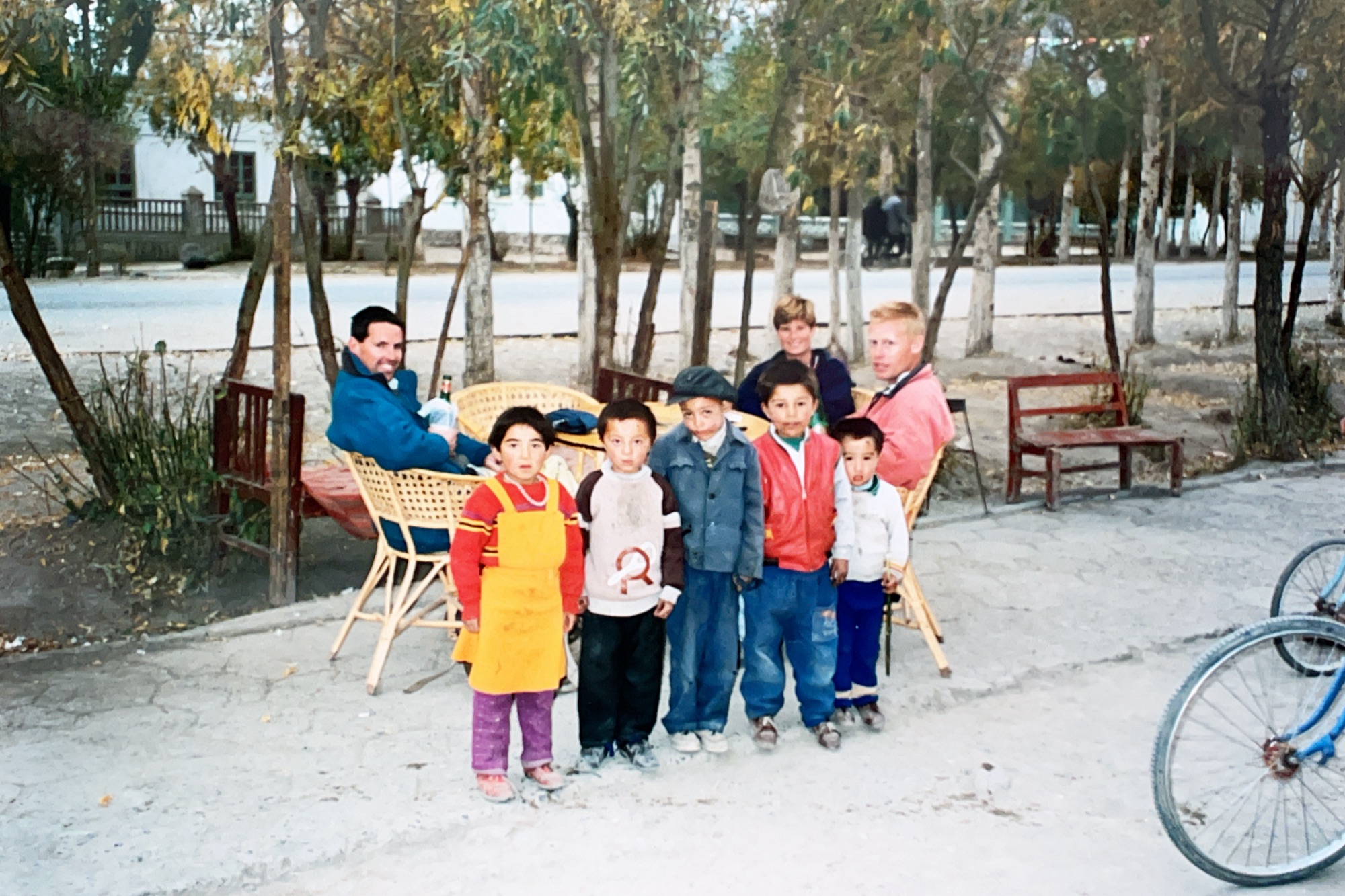
Further up the street we buy a bottle of wine and sit at a cafe table outside another tiny eatery, eating dumplings dipped in chilli sauce and drinking the wine. With the tree-lined street behind, the scene is vaguely European.
As we retire for the night, a cold rain begins to fall from a black sky.

 CurseOfTheTraveller