Trains have played an important part in this trip around the world, and the similarities involved with train travel, no matter where it is in the world, are something that I have considered many times. So now, as train number 321 nears Jinjiang, I am going to leave the last few pages of this diary for a description of some of the trains we have travelled on, stepping first onto a subway train in New York City.
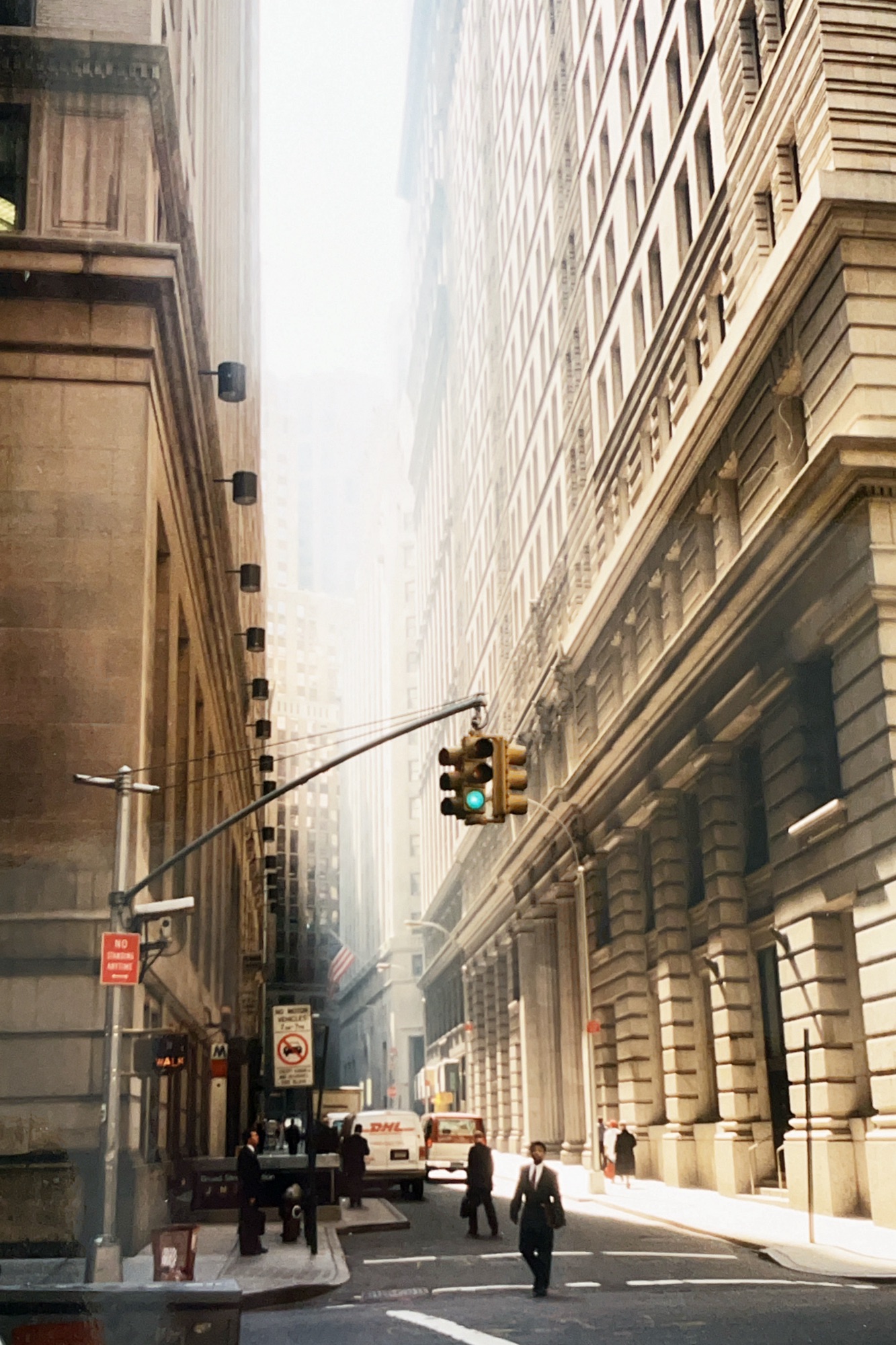
The rattling trains beneath the city’s decaying streets seemed to us to epitomise everything that was dangerous and evil about New York. But riding each day on the A-trains, having descended from the littered environs of Bergen Street, or from beneath the stone columns of Borough Hall, we encountered no dangers at all. The occasional beggar came through the carriages, and the tunnels smelt of the people who lived in them. But no one ever bothered us as we swayed along with the motion of the trains, en route to Bryant Park or Wall Street or Times Square.
On our last day in New York City, we rode the A-train out to JFK, disembarking, it seemed, in a field, where dry grass waved in the hot wind, and aircraft thundered unceasingly overhead. As we stepped off that train, we began a journey which saw us, a few days later, on another train, gliding gently through the fields of Holland.
The trains of Europe glide. They never rattle or screech or hiss, and they keep precise time. European railways are a part of the landscape, yet remain separate from it. We sat in comfort on wide, upholstered seats, watching through tinted windows the orderly fields, the villages with their steeples rising out of the mist, and the tree-lined canals and rivers roll past.

Across the Channel, in England, we boarded our first British train in three years, at Deptford. As we sped toward London on that warm May morning, I remember looking at the backs of the houses beside the tracks, and wondering about the lives of the people within. These fleeting glimpses into people’s lives are fascinating to me, like snatches of conversation overheard in a crowded room. But still, the intentions, dreams, and thoughts of those within are inscrutable to the observer passing in a speeding train.
Charles Dickens best sums up this inscrutability in “A Tale of Two Cities,” in which he wrote: “Every human creature is constituted to be that profound secret and mystery to every other. When I enter a great city by night, every one of those darkly-clustered houses encloses its own secret. Every room in every one of them encloses its own secret. Every beating heart in the hundreds of thousands of breasts there is, in some of its imaginings, a secret to the heart nearest to it. In any of the burial places in this city through which I pass, is there a sleeper more inscrutable than its busy inhabitants are, in their innermost personality to me, or than I am to them?”
Even so, crammed into that speeding train with a hundred men and women of business from The City, I wondered and imagined what might lie behind the twitching curtains.

Asian trains are far less separate from the landscape than their European counterparts. At each stop — and there are many — scheduled and unscheduled, people come and go. People wander about on the platform, or, as is the case may be, beside the track. People buy things, sell things, beg things, steal things. And part of the landscape comes into the train in the form of dust blown from the deserts, in rain creeping through the shutters, in the heat through which the trains swim as they sweep down the lines.
For thousands of kilometres we jolted and sweated in Asian trains, through the flat, bare desert plains of Pakistan, then eastwards through China. And always the houses of the poor lined the tracks, each house containing a small measure of the inscrutable intentions of desperate, resigned people.
And then, one hot November day, we shouldered our way onto a spotless Hong Kong Metro train at the China-Hong Kong border, a border soon to be enclosed in the expanse of the People’s Republic, and seated ourselves.


 CurseOfTheTraveller