After breakfasting at the Tibetan Café, we hire mountain bikes from the No. 2 Guesthouse and ride up to the bus station, where we buy tickets for the sleeper bus to Kunming for tomorrow night. Near the bus station, next to the imposing South Gate of the town, there is an area of stalls selling marble objects, all of which seem mass-produced, along with batik clothes, and embroidered bags.
We browse for a time, then set off on our bikes up to the Zhongshan Pagoda, which stands at the edge of town and forms its dominant man-made feature. We tether the bikes to a tree at the entrance, then walk up an avenue of souvenir hawkers, their wares laid out on tables beneath large white umbrellas.
The pagodas are impressive in their size and construction, the tallest one being 74 metres high. All three are over 1,000 years old, having been built in the mid-9th century, and it is a testament to the skill of the builders that they have stood so long, surviving not only natural upheavals, but also man-made ones, most notably the so-called Cultural Revolution. In its tiered construction, the largest pagoda resembles a square pine cone, tapering gently upwards into the sky, whose deep blue colour serves to highlight the cream of the pagoda’s mortar.
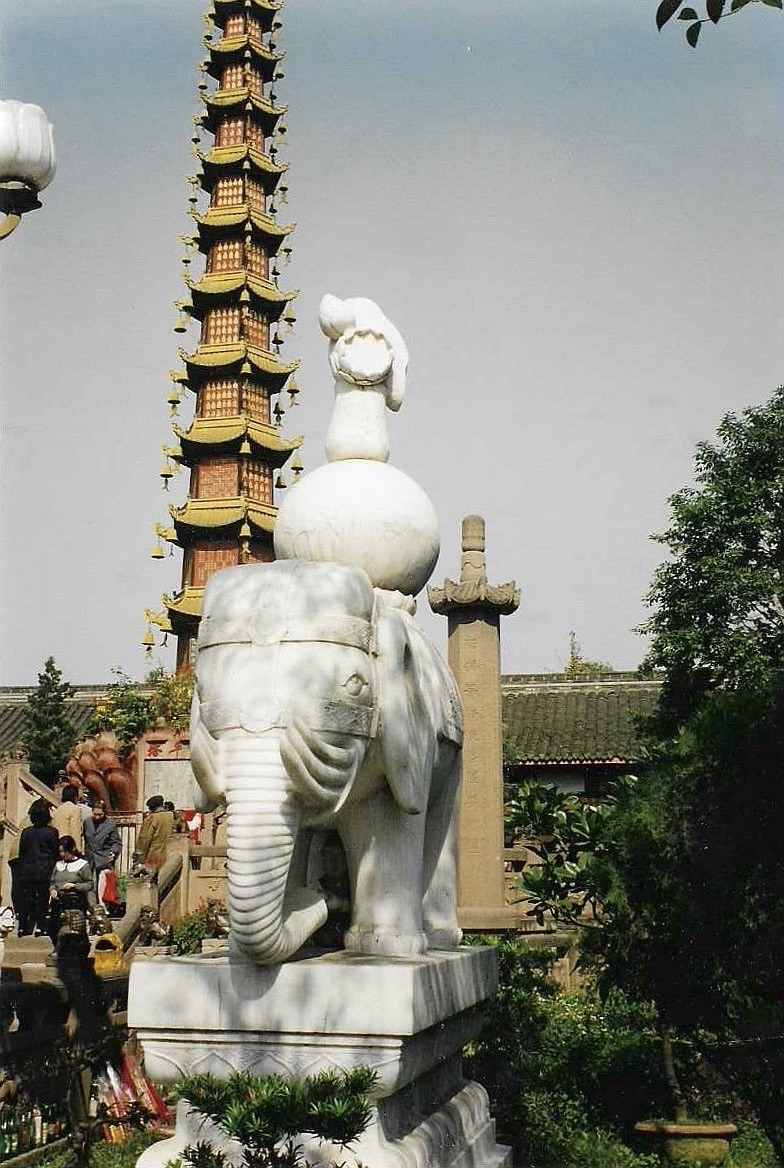
A formal garden of shrubs and conifers surrounds the three pagodas, but there isn’t much else to hold the visitor’s attention, so we retrieve our bikes and cycle down through the town, the tires of the bicycles whirring on the smooth tarmac, to the fields which separate Dali from Erhai Lake. A cobbled road leads straight across the fields, and we bump along past people busy spreading manure and digging at the black soil with their long-handled implements.
Beyond the lakeside village, concrete walls and jetties jut out into the lake’s blue water, creating water meadows and fish farming pools. The trees lining the lake edge are rich in autumn hues, burnt reds and pale yellows, and brightly-painted boats are drawn up against the jetties, where they bob gently up and down on the water.
We shrug off the advances of a boat-ride tout and sit on one of the lake walls, watching fishermen pole into the pier with their long, steel-hulled boats and checking their nets, which are anchored just offshore to bamboo poles protruding from the water. Although the water looks clear and inviting, it contains a soup of floating matter which is probably effluent. Small fish, which Linda aptly describes as “minnowy things,” feed on this soup, but no bigger fish are to be seen. A man and a woman row past in their long, steel boat, upon which perch 20 or more cormorants looking oily and glum, as cormorants are always wont to do.

We find our way back through the village, which is dusty and quiet, and out into the fields again, this time following a dirt track which, although rough, is easier going than the cobbles of the other road. The sun is now quite fierce and it is hot work cycling back to town. We meet Ron and Yvonne halfway across, walking down towards the lake, and stop to chat for a while beside some neatly planted fields of beans. Even the sides of the terraces are planted, and intricate traceries of channels convey water to each field.
With sore backsides from so much cycling, we return the bikes to their owner and repair to Jim’s Peace Café for cold drinks which are served in glasses straight from a freezer. When Linda asks the Chinese guy who runs the café if he has cold Cokes, he effects an Australian accent and replies, “Coldest cokes in the world, mate.” Sad.
In the afternoon we shop. Foreigner Street in Dali is like a miniature Fifth Avenue for travellers, with numerous small shop-come-factories, producing batik clothing in sizes and styles to suit the big noses. I buy a shirt and some shorts and Linda buys a pair of pants. And the remains of the day? Why, cafés of course.

 CurseOfTheTraveller